Maya arts

The Maya world is wide-ranging and highly complex. Maya  art encompasses architecture, sculpture , ceramics, painting, textiles and music. While art from the Classic Period has it its roots in pre-Classic expression, it ws during the former era the Maya art reached its highest levels of refinement and perfection.

What today we call artistic creation was largely of a ritual and courtly nature in the life of the ancient Maya. Everything from buildings and personal articles—clothing, headdresses and other symbolic adornments—to utensils for funerary use (whose complexity was a reflection of the deceased’s social status) is suffused with ritual value. Jade was the Mayas’ ritual material par excellence—elites even capped their teeth with it. Many funeral masks are made of jade or contain the material.

Architecture
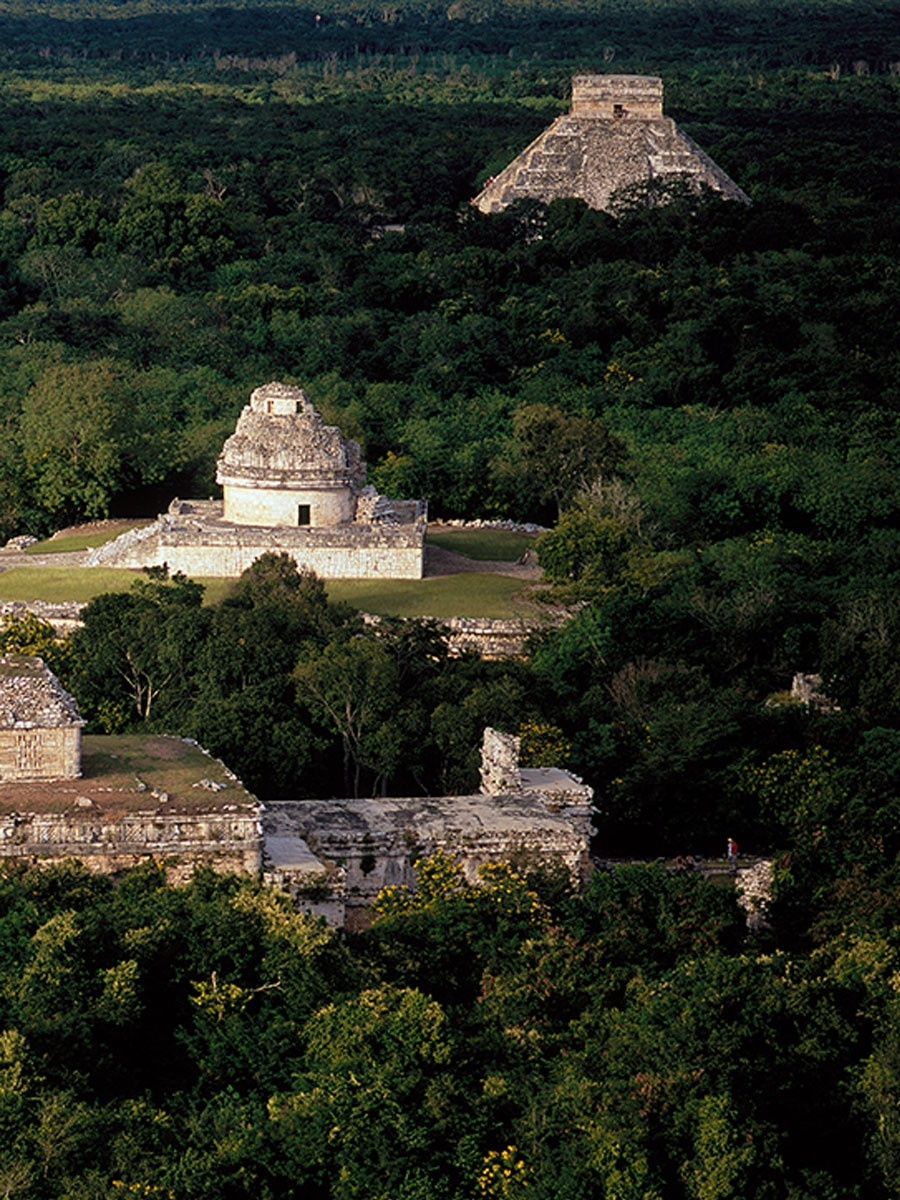
Maya architecture includes platforms, pyramids, temples, ball courts and fortifications, largely of limestone and wood. The placement of structures in ceremonial centers tends to coincide with the cardinal directions; layout is a function of topography and surface conditions.

Although there are features and elements that are common to Maya architecture per se (false arches or vaults, crenellations, steles and altars), distinct sub-styles, such as the so-called Petén and Puuc modes, can also be distinguished.

Common Elements in Maya Architecture
Though sometimes manifested in different styles, Maya architecture of the region shares elements such as the following:

Low-rise ceremonial platforms (maximum height 4 m), with carved figures along their sides. Platforms often support altars, standards and incense braziers.

Pyramids that serve as the base for a temple.

Quadrangular temples with vertical walls featuring from one to five entrances that lead to a variety of chambers either directly or by passing through a portico. Temple interiors vary widely. In some temples, there are rectangular openings or openings in the form of the IK sign, meaning air. Murals and hieroglyphic inscriptions—many still not completely deciphered—can be found within many such temples.

Crenellations consisting of lofty constructions on roof tops and temple façades, which enhance pyramid-temple compound verticality and announce to a nearness with the heavens.

False arches or vaults, also called Maya arches (saledizas), are elements only known in Maya constructions. They were creating by placing a series of stones atop one another, directly on top of door lintels, such that each series cantilevers slightly out from the series just below, such that only a tiny space, to be filled with a small stone, occupies the “arch’s” highest point. The technique was possible thanks to a knowledge of limestone mortar (also used to cement walls).

Monolithic steles, which initially served only as calendar references, ultimately became works of art, numbers being transformed into poetic glyphs. Starting in the third century AD, steles coincide with religious observances carried out in each calendar “period,” thus they are used today to reconstruct chronologies and distinguish historical periods.

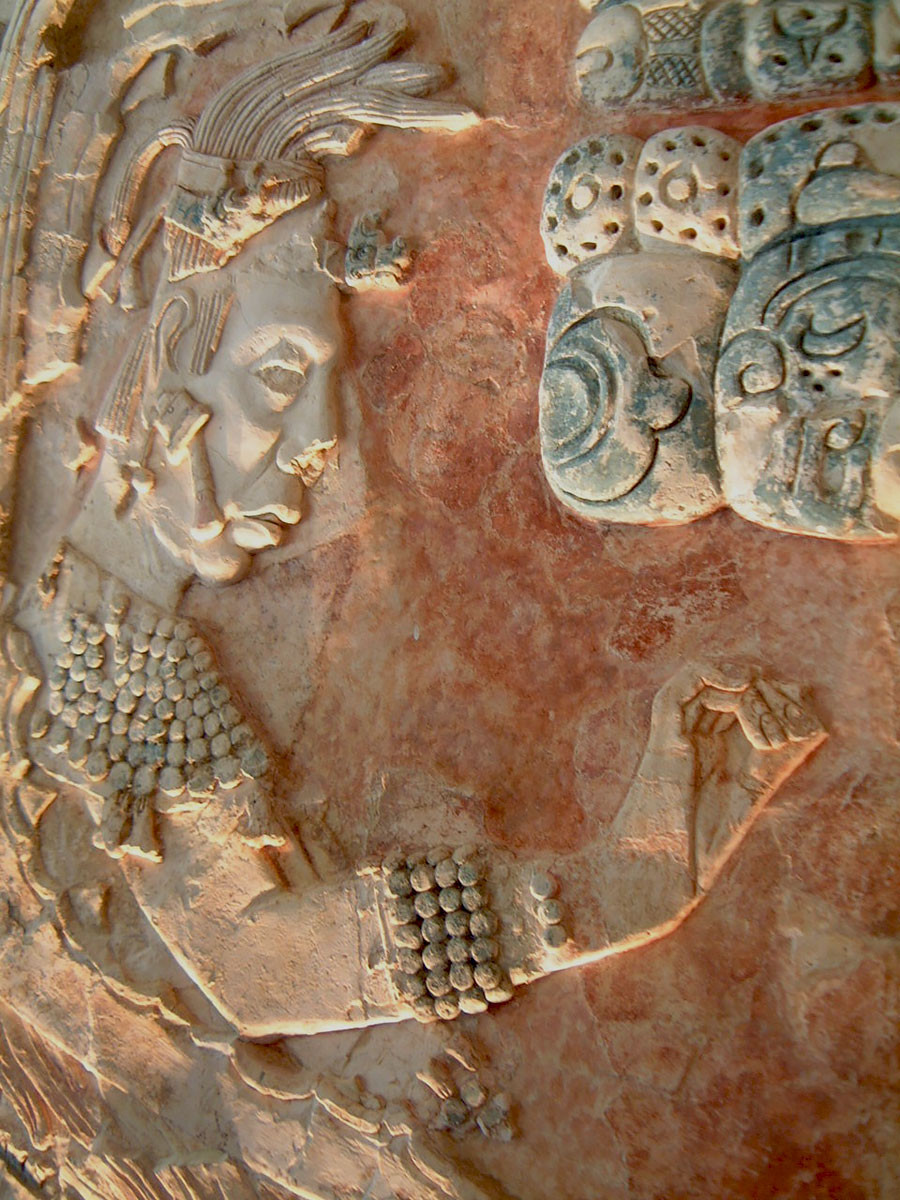
A glyph represents an ideogram that designates a name, deity, reigning dynastyor other characteristic site element. Some glyphs are related to the lives of rulers or city histories (for example, the birth or ascent to power on the part of an historical figure, alliances, marriages, etc.).

Sculpture
Maya sculpture was fashioned in diverse media and techniques to make altars, steles, plaques, lintels, tablets, thrones, doorjambs, columns, reliefs and ball-game scoring figures. Some monuments incorporate sculpture made of wood, stucco or calcareous stone, at times covered in stucco or polychromed.

Ceramics
Ceramic discoveries are frequent in funeral chambers, as ceramics were often reserved for the underworld, and include a number of techniques. Polychromed ceramics, associated with the funerary world, were the most extensive. Objects were largely painted kwith geometric motifs although animals could also be represented. Some included scenes of noble life, military episodes, rulers’ images or supernatural beings.

Music
Evidence exists to support the use of wind instruments (whistles, flutes and conchs) as well as percussive ones (stone or wood xylophones, tortoise shells and “rain sticks”).

Painting
As was the case with Maya architecture, Classic Period mural painting achieved a high degree of technical perfection. What few examples survive astonish by means of their realism and their capacity for emotional expression. Though they feature diverse colors, red and blue tones prevail.